Invasive Tree Roots - Damage and Control of Invasive Tree Root Systems
Invasive tree roots frequently extend farther than you lot might call back. Along the fashion, they meet underground pipes, wall foundations, and even sidewalks. But the determined invasive tree root system volition not permit anything stop its growth. The relentless tree would gut sidewalks, cake pipes, and tilt the house sympathetically toward them. And all considering you lot planted your sycamore tree or Southern magnolia also close to the business firm, fence, or road.
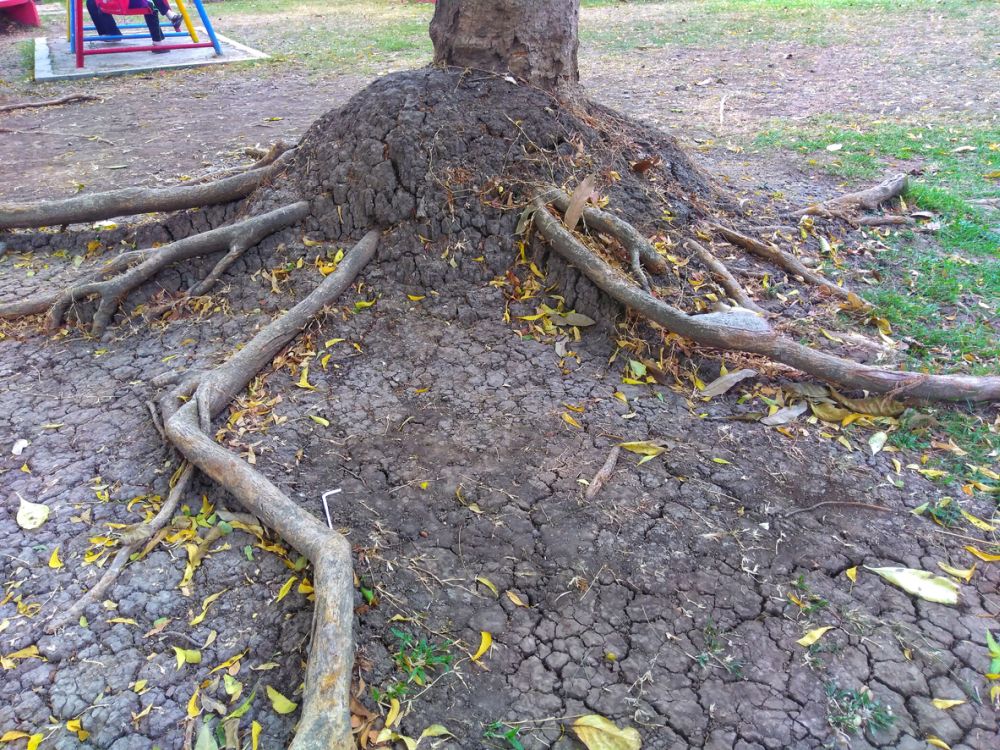
The problem with invasive tree roots is that by the time you realize you have an issue, the damage is ofttimes washed. The sidewalk is torn apart. The drainage pipes are blocked and sewage has flooded the basement. As for the wall nearest to the tree, it'south already leaning at a precarious angle. It is often costly to fix the impairment acquired by invasive tree roots. So how would you avoid all these headaches? Let'south get to the root of the problem and uncover the virtually common culprit trees with invasive root systems.
Invasive Tree Root Impairment
Trees are known for their longevity. Over the years, their penetrating root systems continue spreading out in search of moisture and nutrition in the soil. The problem is, the roots of nigh trees grow closer to the surface than we might call back. Instead of going deep into the soil, the root systems of some trees prefer to fan out horizontally. To complicate things further, sure tree species adopt to grow their sinewy roots not below but higher up footing. So it's no wonder that the impairment that invasive tree roots cause affects buildings likewise as infrastructure.
Underground Pipes
Nearly cloak-and-dagger pipes are besides solid to allow invasive tree roots to interruption them. Nevertheless, the aggressive roots can utilize plenty pressure level on the pipes to cause cracks. The tiny roots then make their way within where they presently fill upwardly the cracks then cake the piping. Poplars and willows in item favor the moist conditions inside the drainage pipes. And since there'due south a lot of nutrition there, the tree will direct most of its root growth in that area. By the time your plumber pinpoints the blocked pipe, yous'll observe that the roots are likewise large to remove.
Foundations
Invasive tree roots have had a bad reputation for causing damage to foundations and causing the plummet of walls or even the whole business firm. But nether close examination, it turns out that the roots are not the existent culprit here. On their own, the tender roots are not capable of causing cracks in the house foundations. As is the case with underground pipes, an external factor has to showtime the scissure that the roots take full advantage of. Soil shrinkage is the reason the cracks announced in the foundation. If the soil is clay, and so tree roots in the soil could suck the moisture out of the soil causing it to go dry which accelerates the shrinkage. This in upshot would wreak havoc with the foundations of the house.
Pavement
Whether it's the pavement, sidewalk, driveway, or patio, planting the wrong tree nearby could literally upend the ground surface and everything on top of it. But what causes the tree roots to rise to the surface? Usually, this happens when the soil is as well compact for the roots to grow in that location. So they spread near the surface where overtime the roots gain plenty girth to breach the topsoil and leave a gaping pigsty in the driveway or sidewalk.
Trees with Invasive Roots
Luckily not all trees take such invasive root systems. The majority of tree species play prissy either with the other trees or any surrounding buildings and underground infrastructure. That said, some copse don't play past the rules and you lot need to think twice before you constitute whatsoever of the following tree species.
Silver Maple Tree
An impressive tree that becomes a sight to look at in the autumn with its golden leaves. Merely if you lot await nether your feet you lot might notice the early signs of cracks in the sidewalk or pavement. The roots of the silver maple tree are shallow and abound close to the surface. Every bit the tree matures, the roots become monstrous. They suspension the top basis and extend for many feet becoming not merely a nuisance but also a walking hazard. You can imagine what these robust roots would do to a sewage pipage or the foundation of the building. Experts recommend you avoid planting this tree on your holding altogether.
Southern Magnolia
You might know it simply as the magnolia. A large tree that spreads its canopy far and wide. But if the top of the tree is so impressive, imagine what the root organization that supports this tree is like. One of the heaviest and complicated root systems, the magnolia has knotted roots that crowd out whatever other plants in the vicinity. The damage this tree with its invasive roots cause goes usually unseen under the surface. Clay soil dries out fast, thanks to the voracious roots, and puts a strain on the foundations. The roots of the magnolia are opportunistic and would exploit whatever cracks in underground pipes and could block or rupture them.
Willow Copse
Given enough space and time, the willow will spread out its enormous root organization nearly xl anxiety in every direction. Anything that comes in their way gets destroyed, upended, or mangled. This includes pavements, patios, drainage pipes, and the innocuous route. So consider a unlike tree if you accept a pocket-size garden. The willow tree is definitely non the all-time option for a backyard or a small lawn. This includes the various willow species such equally the weeping willow, Austree willow, and the corkscrew willow. Experts recommend y'all avoid growing any species of the willow tree in your garden even if you have enough space. Equally we saw, their impairment doesn't but impact the to a higher place-ground only whatsoever underground structures also.
Bradford Pear
The Bradford pear is a handful. By that nosotros mean it's not merely its invasive roots that would give you a headache. This tree is every gardener'due south nightmare. It grows besides fast and as well large for most gardens. It has flowers but they smell like fish. Subsequently the fishy flowers fade, thousands of thorny seeds float out of the tree where they country in the vicinity and proceed to sprout and cover the area. And if that's non enough, the Bradford pear tree, large and mighty every bit it is, tends to explode in a windstorm sending splinters in every management. So that's 1 other species to avoid at all costs.
Hybrid Poplar Trees
While they don't live longer than fifteen years on average, hybrid poplar trees don't waste time expanding their impressive root system wherever there'due south an inch of infinite to explore. This exploitative nature of this tree species makes it a take a chance near buildings, driveways, and underground pipes. If you're wondering why the poplar needs to be ambitious underground, one look at the top of the tree gives y'all the answer. The tree grows straight up and it relies on a circuitous network of wide-spreading roots to keep it standing. These roots not only drive deeper into the ground but spread horizontally just as eagerly likewise.
Sycamore Trees
It's condom to say that sycamore trees are only beautiful in the wild. On peak of a hill or deep in the forest, they await majestic and sublime. But non in your garden where their leaves drop faster than the tree can grow them back. That's not the but trouble you might have with these deciduous trees though. Every bit large trees that tower over buildings and other trees, they have an impressive root arrangement to back up them. That invasive root system turns sidewalks upside down, chokes the roots of other copse nearby, and gets within h2o pipes causing blockages and ruptures. In short, you shouldn't establish the sycamore in your garden or lawn no matter who spacious they are.
Command the Damage of Invasive Tree Roots
The roots of trees come in dissimilar shapes and sizes. Some trees such equally the Kingdom of norway maples take a complex root system that wraps itself around the base of operations of the tree similar a girdle. But if the self-inflicted damage of the Norway maple just impacts that stately tree, other species will literally get out of their way to damage your property. Then what can y'all do most those invasive tree roots?
- Root Barriers: When you can't cut or transplant the tree, and so barricading the roots with plastic sheets seems similar a price-constructive option. It won't harm the tree or bear on its growth while at the same time you minimize the damage those sprawling roots could crusade. This solution often diverts the tree roots abroad from the foundations or cloak-and-dagger pipes.
- Trim the Roots: That might seem to be the most obvious solution but it doesn't work all the time. Well-nigh trees have about 4 or 5 primary root systems. If you cut one of them yous're practically limiting the tree'southward supply of h2o and nutrition. Sometimes, trimming the roots could kill the tree, so you should pursue this choice with caution.
- Irrigation Drip Line : If the invasive tree roots seem to be sucking the moisture out of the soil near the foundations, consider installing an irrigation baste line virtually the base of the tree. This will go along the tree hydrated. The drip line needs to exist buried under the soil for information technology to piece of work properly.
- Replace the Pipe: This works for blocked drainage, sewage, and h2o pipes. Nigh often the invasive tree roots observe a fissure in the pipage, enter it, and fill up the whole pipe. This could rupture the pipe or, at best, just block it. Instead of removing the roots mechanically on a regular basis, you should replace the pipe. Install root barriers to divert the roots from the location of the piping.
Source: https://www.diys.com/invasive-tree-roots/
0 Response to "Invasive Tree Roots - Damage and Control of Invasive Tree Root Systems"
Post a Comment